How to Identify Contaminated Leafy Greens at Home
Last Updated: November 24, 2026
Quick Summary
You cannot identify contaminated leafy greens by sight, smell, or touch at home, and there is no home test for Cyclospora, Listeria, E. coli, or Salmonella on a leaf. Visible spoilage is a quality issue, not a safety issue, so keep greens cold and the bag sealed instead of relying on inspection.
- Spoiled lettuce shows wilted or slimy leaves, brown or yellow edges, dark bruised spots, and a sour or musty smell.
- Washing reduces dirt and some surface bacteria but does not reliably remove pathogens from contaminated leafy greens.
- Checking grocery items for recent recalls takes about two minutes by searching the product name or pathogen.
- Symptoms of food poisoning from leafy greens usually appear within hours to days, including diarrhea, cramps, nausea, vomiting, and fever.
- After suspected exposure, save the packaging and receipt and note what you ate and when symptoms started.
Table of Contents
- How to Identify Contaminated Leafy Greens at Home
- How to Tell If Lettuce Is Spoiled
- How to Wash Leafy Greens Safely
- How to Identify Contaminated Leafy Greens at Home
- Checking Grocery Items for Recent Recalls
- Symptoms of Food Poisoning From Leafy Greens
- What to Do After Suspected Exposure
- Frequently Asked Questions
How to Identify Contaminated Leafy Greens at Home
You cannot see, smell, or taste the pathogens behind most leafy green illnesses. Visible spoilage is a quality issue; contamination is a safety issue, and the two rarely overlap. (Source: FDA advice on selecting and serving produce)
The article is blunt about what home inspection can and cannot tell you.
Question Answer Can you see contamination? No, pathogens are invisible Can you smell contamination? No, contaminated leaves can smell normal Can you taste contamination? No, a contaminated leaf can taste fresh Is there a home test? No test for Cyclospora, Listeria, E. coli, Salmonella What does visible spoilage mean? A quality issue, not a safety issue What should you do with spoiled greens? Throw the package out What helps instead of inspection? Keep greens cold and the bag sealedHow to Tell If Lettuce Is Spoiled
Spoiled lettuce shows clear signs: wilted or slimy leaves, brown or yellow edges, dark bruised spots, and a sour or musty smell. If any are present, throw the package out.
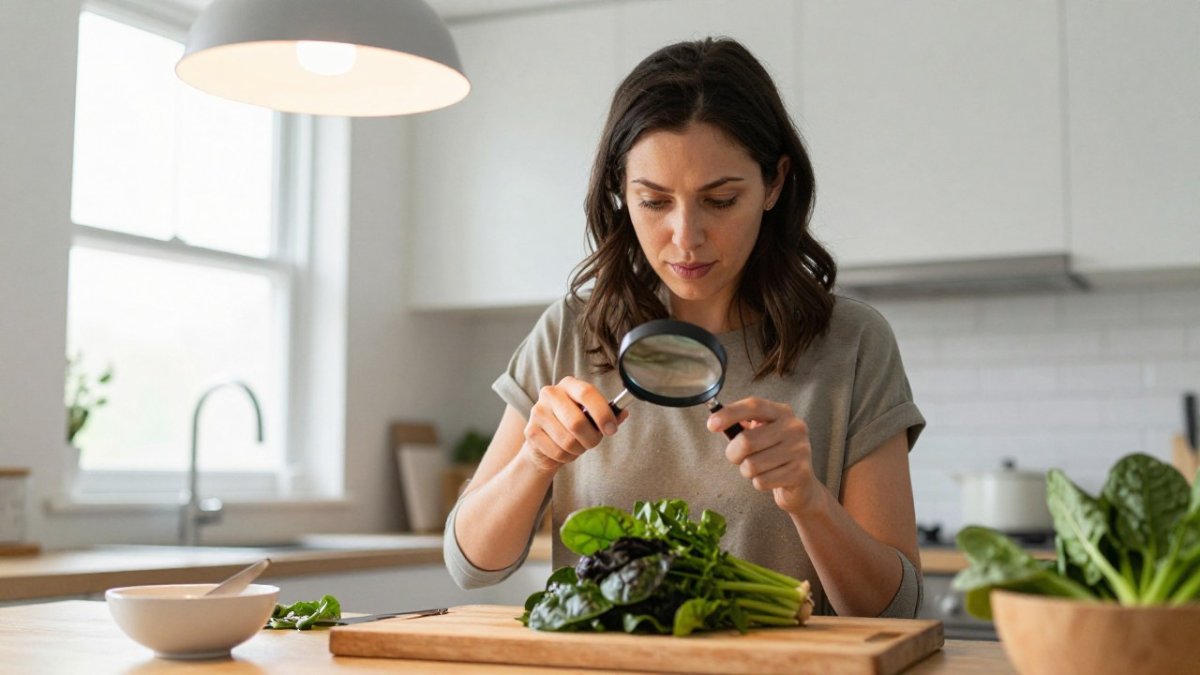
Home cook inspecting romaine lettuce with brown wilted edges for signs of contaminated leafy greens in a fridge.Spoiled and contaminated greens are different problems: a leaf carrying Cyclospora or Listeria can look crisp and fresh. If you are checking a bag because of a recall notice, our lettuce recalls and outbreak tracker shows current outbreaks and their symptoms. (Source: USDA FSIS guidance on refrigeration and food safety)
How to Wash Leafy Greens Safely
Washing leafy greens safely means separating the leaves, rinsing each under clean running water, and drying with a clean towel. Washing reduces dirt and some surface bacteria but does not reliably remove pathogens, and no home method makes contaminated leafy greens safe. Keep raw meat, poultry, and seafood on separate boards, and wash utensils with hot soapy water between tasks. Vinegar soaks and commercial produce washes are popular, but the evidence that they remove pathogens is thin; the FDA advice on selecting and serving produce sticks to running water for a reason.
How to Identify Contaminated Leafy Greens at Home
The honest answer is that you cannot identify contaminated leafy greens by sight, smell, or touch at home. There is no home test for Cyclospora, Listeria, E. coli, or Salmonella on a leaf. Keep greens cold, keep the bag sealed or the container covered, and do not let a half-used bag sit in the door shelf for a week. USDA FSIS guidance on refrigeration and food safety is a solid reference for safe storage temperatures and times.
Checking Grocery Items for Recent Recalls
Checking grocery items for recent recalls takes about two minutes: search the product name or pathogen, then confirm against the official notice. Our recall lookup tool links every entry to the official notice. Matching the lot code is the step people skip, and it is the only step that gives you a real answer.
Symptoms of Food Poisoning From Leafy Greens
Symptoms usually appear within hours to days: diarrhea, stomach cramps, nausea, vomiting, and fever. Cyclospora causes watery diarrhea about a week after exposure; Listeria can take much longer and is especially dangerous during pregnancy; E. coli and Salmonella typically hit within a day or a few days. Seek care for blood in your stool, high fever, inability to keep fluids down, or severe cramps, and call a doctor sooner if pregnant, immunocompromised, elderly, or caring for a child under five.
What to Do After Suspected Exposure
If you think you ate contaminated greens, save the packaging and receipt, note what you ate and when symptoms started, contact a doctor if symptoms are severe, and check whether the product is under recall. You can also read more about food poisoning outbreaks and recalls.
Contaminated greens rarely announce themselves, so the work is in the routine: inspect, wash, store cold, and check recalls before the first bite. Food Poison Central tracks outbreaks and recalls nationwide, offers a symptom checker and recall lookup, and connects people who got sick with a free, confidential case review through our affiliated law firm. Get started with Food Poison Central and check your groceries against current recalls today.
Frequently Asked Questions
Can you tell if leafy greens are contaminated by looking at them?
No. Visible signs like wilting, browning, or slime point to spoilage, not necessarily to pathogens. Contaminated leafy greens can look, smell, and taste completely normal, which is why the CDC and FDA rely on recalls and outbreak investigations rather than appearance. Treat inspection as one layer of protection, not a test. If a product you bought is named in a recall, discard it even if it looks fresh.
Does washing leafy greens remove harmful germs?
Washing under clean running water removes dirt and some surface debris, but it does not reliably remove bacteria or parasites such as Cyclospora. Do not use vinegar solutions or produce washes as a substitute for cooking or discarding recalled product. For anyone at higher risk, including young children and immunocompromised people, the safest approach is to follow recall alerts and avoid raw greens from a product named in an active outbreak.
What should you do if your lettuce is part of a recall?
Stop eating it and discard it in a sealed bag so others in the household cannot eat it. Wash hands, counters, and any containers that touched the product. Note the brand, lot code, and purchase date in case symptoms appear. If you or a family member develop diarrhea, vomiting, or fever, contact a healthcare provider and mention the recalled product. A free case review may be available if you want to understand your options; check Food Poison Central's website for current terms.