Legal Help for Food Poisoning: Proving Your Restaurant Claim
Last Updated: November 7, 2026
Quick Summary
To get legal help for food poisoning, keep your receipt, save the leftover food, get medical care with lab testing, and report the illness to your local or state health department. An attorney can then use that evidence to prove a restaurant's negligence and pursue a claim.
- The first 48 hours matter most, so protect your health and your evidence immediately.
- Keep the receipt, which the article calls the single most useful document you own.
- A lab result naming the pathogen separates a documented diagnosis from suspicion.
- Most claims begin with a demand letter and negotiation rather than a lawsuit.
- There is no standard settlement amount; values depend on medical costs, lost wages, and proof.
Table of Contents
- Acting Fast After Suspected Food Poisoning
- How to Prove Food Poisoning From a Restaurant
- Can You Sue for Food Poisoning? Liability and Deadlines
- Food Poisoning Lawsuit Settlement Amounts and Claim Calculators
- Frequently Asked Questions
Acting Fast After Suspected Food Poisoning
If a restaurant meal made you sick, the first 48 hours matter most. Protect your health first, then protect your evidence.
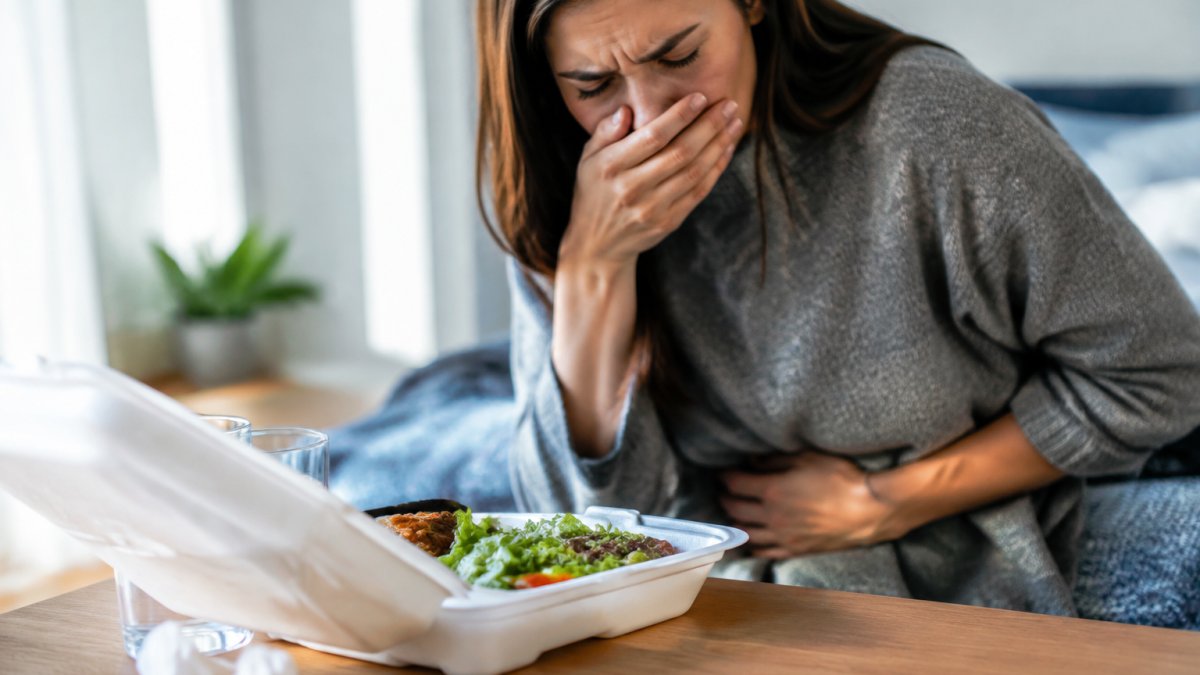
Step-by-step guide for collecting evidence of a food poisoning source from a recent takeout meal.- Get medical care. See a doctor or urgent care; stool testing may be considered when symptoms are severe.
- Keep the receipt. It is the single most useful document you own.
- Save the food. Wrap leftovers in a sealed bag and freeze them if you can.
- Write it down. Note what you ate, when symptoms started, and who else got sick.
- Report it. Contact your local or state health department and describe the meal and timing.
Watch out: throwing away the leftovers or the receipt is the most common mistake. Without either, proving the source becomes far harder.
Unsure whether your symptoms fit a foodborne illness? Our guide on what to do after restaurant food poisoning walks through the immediate steps, and you can check outbreaks by state to see whether others reported the same problem.
The article lists the immediate steps to take within the first 48 hours after a suspected food poisoning.
Step What to do Get medical care See a doctor or urgent care; stool testing may be considered Keep the receipt Called the single most useful document you own Save the food Wrap leftovers in a sealed bag and freeze them Write it down Note what you ate, when symptoms started, who else got sick Report it Contact your local or state health departmentHow to Prove Food Poisoning From a Restaurant
Proving a restaurant caused your illness means connecting three things: the contaminated food, your symptoms, and the timing. A foodborne illness claim is a personal injury case built on medical records and a documented timeline, so evidence captured early matters most.
- Medical records and lab results. Ask your doctor to order a stool culture or a multiplex gastrointestinal pathogen panel when symptoms are severe or lasting. A lab result naming the bacteria, virus, or parasite is the difference between "I think it was the chicken" and a documented diagnosis. Request copies of the visit notes and lab report, not just the bill.
- Purchase receipts and payment records. Keep the paper receipt and screenshot the card or mobile-payment transaction, which timestamps the purchase even if the paper is lost.
- Leftover food samples. Seal leftovers in a clean container and refrigerate or freeze them. Do not season, reheat, or handle them more than necessary. The health department or a lab may test the sample for the same pathogen found in your stool.
- A symptom timeline. Write down what you ate, when, when symptoms began, and how they progressed. Incubation windows differ by pathogen, so the gap between the meal and the first symptom is itself evidence.
- Other sick diners. If everyone who shared a dish got sick and everyone who did not stayed well, that pattern is powerful. Collect names and contact information and encourage them to report and get tested.
- Communications. Save texts, emails, and social-media messages about the meal and the illness, and keep any response from the restaurant.
Watch out: washing or discarding the leftover food, or waiting until symptoms pass before seeing a doctor, destroys the two pieces of evidence that are hardest to reconstruct later.
How investigators connect an illness to a specific food
- Interviews. Investigators ask what you ate, where, and when, and compare your answers with other reported cases.
- Lab testing. Clinical labs identify the pathogen from your stool sample; public health labs may perform additional typing, such as pulsed-field gel electrophoresis or whole-genome sequencing, to see whether your isolate matches others.
- Purchase and menu records. Receipts, reservation logs, and menu records establish which dishes and ingredients were served on the dates in question.
- Facility inspection. Inspectors review the restaurant's food-handling practices, temperatures, supplier records, and employee illness policies.
- Outbreak patterns. When multiple unrelated people report the same pathogen after eating at the same place, the pattern itself becomes evidence that the establishment is the common source.
Reporting early can also help public health investigators connect your illness to a cluster, and the investigation record may later be relevant to a claim.
When several people got sick after the same meal
Group cases are often stronger than individual ones because the shared meal controls for other causes. If several people who ate with you became ill, have each person write a timeline, keep receipts, seek testing, and report to the health department. A single complaint can be dismissed as a coincidence; a cluster of lab-confirmed cases from one meal is much harder to explain away.
Our breakdown of the evidence needed to prove where you got sick covers medical and physical proof in more detail.
Can You Sue for Food Poisoning? Liability and Deadlines
You can sue a restaurant for food poisoning when negligence or unsafe food handling caused your illness and you can prove it. The legal theory is usually negligence, a failure to use reasonable care in storing, preparing, or serving food, though some cases also involve breach of warranty or strict liability.
Who can be liable
- The restaurant or food-service establishment. Unsafe holding temperatures, cross-contamination, poor employee hygiene, or sick workers handling food.
- The supplier or distributor. Contaminated ingredients the restaurant had no way to detect.
- The producer or manufacturer. Contamination at the processing or packaging stage, common in produce and ready-to-eat recalls.
- The retailer. A grocery store or market that sold contaminated or improperly stored food.
A single illness can involve several of these parties, and an attorney may need to trace the food back through the supply chain using invoices, lot codes, and recall records.
The filing deadline
Every state sets its own filing deadline through a statute of limitations, and the window is often short, commonly months to a few years from the date of illness or discovery. We will not quote a number because it varies by state and case type, and some states apply different rules to claims against government entities or to minors. Check your state's official court or statute source, or ask an attorney, before time runs out.
What an attorney will ask
- Did you receive medical treatment, and do you have records?
- Was the food tested or the illness confirmed by a lab?
- How long after eating did symptoms begin?
- Did the health department inspect or cite the restaurant?
- Did anyone else who shared the meal get sick?
- Do you have the receipt or payment record?
How a claim is filed and what it costs
Most food poisoning claims begin with a demand letter and negotiation rather than a lawsuit.
On fees, a common arrangement in personal injury cases is a contingency fee, where the attorney is paid a percentage of any recovery rather than an hourly rate, plus reimbursement of case costs such as filing fees, records requests, and expert fees.
For a general walkthrough of proving a claim and whether you can sue, read how to prove a food poisoning claim.
Food Poisoning Lawsuit Settlement Amounts and Claim Calculators
There is no standard settlement amount for a food poisoning case. Values depend on medical costs, lost wages, pain and suffering, and how strong the proof is.
- Medical expenses, hospitalization, and medications
- Lost wages and time off work
- Long-term treatment for lasting complications
- Pain and suffering
Online claim calculators give rough ranges only. They cannot weigh your lab results or your state's rules. For a general view of what a case may involve, see our complete food poisoning recovery guide.
A restaurant meal should not cost you your health or your savings. If you got sick and the evidence is still fresh, act now.
Frequently Asked Questions
How do you prove food poisoning came from a restaurant?
Proof usually rests on three things: a medical record linking your symptoms to a foodborne illness, a food history showing what you ate and when, and evidence that others who ate the same item got sick. Save your receipt, keep any leftover food, and report the illness to your local or state health department. An outbreak investigation that connects multiple illnesses to one establishment is the strongest evidence you can have.
Can you sue a restaurant for food poisoning?
You can pursue a personal injury claim if you can show the restaurant served contaminated food and that food caused your illness. Negligence or product liability must be established, and you need documented medical treatment, lost wages, and other damages. Deadlines vary by state, so act quickly. A free case review with a food poisoning attorney can tell you whether your situation meets the standard for legal action.
What evidence should I save after suspected food poisoning?
Keep the restaurant receipt, any leftover food in its original packaging, and photos of the item and packaging. Save medical records, lab results, and bills from doctor visits or hospitalization. Note the names of everyone who shared the meal and their symptoms. Preserve text messages and emails about the illness. This evidence supports both a health department report and any later food poisoning claim.
Add foodpoisoncentral.com as a preferred source on Google →Frequently Asked Questions
How do you prove food poisoning came from a restaurant?
Proof usually rests on three things: a medical record linking your symptoms to a foodborne illness, a food history showing what you ate and when, and evidence that others who ate the same item got sick. Save your receipt, keep any leftover food, and report the illness to your local or state health department. An outbreak investigation that connects multiple illnesses to one establishment is the strongest evidence you can have.
Can you sue a restaurant for food poisoning?
You can pursue a personal injury claim if you can show the restaurant served contaminated food and that food caused your illness. Negligence or product liability must be established, and you need documented medical treatment, lost wages, and other damages. Deadlines vary by state, so act quickly. A free case review with a food poisoning attorney can tell you whether your situation meets the standard for legal action.
What evidence should I save after suspected food poisoning?
Keep the restaurant receipt, any leftover food in its original packaging, and photos of the item and packaging. Save medical records, lab results, and bills from doctor visits or hospitalization. Note the names of everyone who shared the meal and their symptoms. Preserve text messages and emails about the illness. This evidence supports both a health department report and any later food poisoning claim.